
SEO
Why Website Traffic Is Low? Mistakes Killing Your Online Sales
Low website traffic got you down? Discover the hidden mistakes costing you sales & boosting your competitors. Read our expert tips & reclaim your audience!
AI Autopilot · · 5 min read
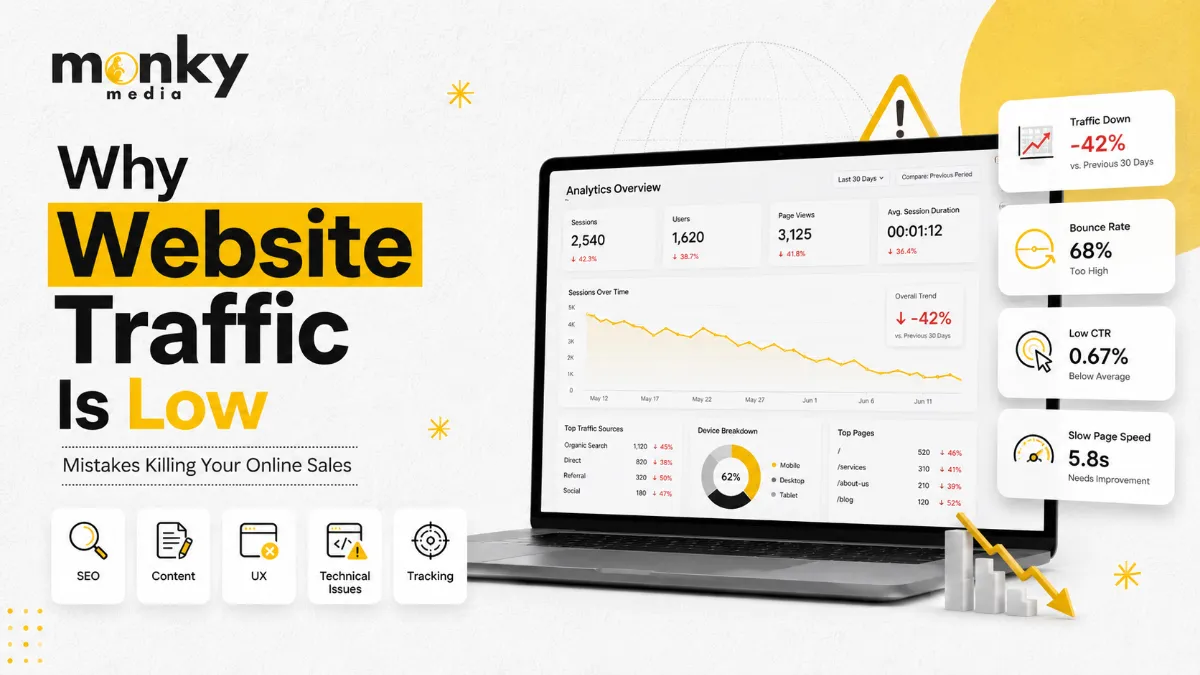
Is Your Website a Ghost Town? Why Website Traffic Is Low
You've built a website. It looks great. But nobody's visiting. Sound familiar? Wondering why website traffic is low? You're not alone. Many businesses struggle to attract visitors, which directly impacts their sales. Let’s dive into why this might be happening and, more importantly, what you can do about it.
Think of it like opening a new cafe in Pune. You've got the best chai and delicious snacks, but if nobody knows you're there, you won't get any customers. The same applies to your website. Let’s figure out how to get more people through your virtual doors.
The Usual Suspects: Common Reasons for Low Website Traffic
Let's look at the most common reasons why your website isn't getting the traffic it deserves:
1. SEO? What SEO?
SEO, or Search Engine Optimization, is how you tell Google (and other search engines) what your website is about. If your SEO is weak, Google won't know where to rank you. It's like trying to find a specific shop in a crowded Mumbai market without any signs – impossible!
- Missing Keywords: Are you using the words people actually search for when looking for your products or services? Think like your customer. If you sell handcrafted jewelry, are you targeting "handcrafted jewelry" or just "jewelry"?
- Poor On-Page Optimization: This means your page titles, descriptions, and headings aren't optimized for search engines. Every page should tell Google what it's about.
2. Content is King (But Is Yours a Joker?)
Content is what attracts people to your website. If your content is boring, outdated, or simply non-existent, people won't stick around. Imagine visiting a restaurant with an empty menu – you'd leave, right?
- Lack of Fresh Content: Are you regularly updating your website with new blog posts, articles, or product descriptions? Stale content signals to Google (and your visitors) that your website is inactive.
- Irrelevant Content: Is your content answering the questions your target audience is asking? Focus on providing value.
3. Social Media Silence
Social media is a powerful tool for driving traffic to your website. If you're not active on social media, you're missing out on a huge opportunity. Think of those viral Instagram Reels that send thousands to a D2C brand's website. That could be you!
- Inconsistent Posting: Are you posting regularly? Consistency is key.
- Lack of Engagement: Are you interacting with your followers? Social media is a two-way street.
4. Mobile Unfriendly? Big Mistake!
Most people browse the internet on their phones. If your website isn't mobile-friendly, you're losing a significant portion of your potential traffic. Imagine trying to read a tiny newspaper on a crowded train – frustrating, right?
- Slow Loading Speed: Mobile users are impatient. If your website takes too long to load, they'll leave.
- Poor Navigation: Is it easy to find what you're looking for on a mobile device?
5. Neglecting Link Building
Links from other websites act as votes of confidence for your website. The more high-quality links you have, the higher Google will rank you. It's like getting recommendations from respected people in your industry.
- Lack of Backlinks: Are you actively building backlinks from other websites?
- Low-Quality Links: Are the links you're getting from reputable sources?
Quick Checklist: Action Steps to Boost Your Website Traffic
- Keyword Research: Use tools like Google Keyword Planner to identify the keywords your target audience is searching for.
- On-Page SEO Audit: Review your website's page titles, descriptions, and headings to ensure they're optimized for your target keywords.
- Content Calendar: Create a content calendar to ensure you're consistently publishing fresh, relevant content.
- Social Media Strategy: Develop a social media strategy that includes consistent posting and engagement.
- Mobile Optimization: Test your website on mobile devices to ensure it's mobile-friendly and loads quickly.
- Link Building: Reach out to other websites in your industry and ask for backlinks.
Don't Let Low Traffic Kill Your Sales!
Low website traffic can be frustrating, but it's a problem you can solve. By addressing the common mistakes outlined above, you can start driving more traffic to your website and increasing your sales. Remember, it's about making your website visible and valuable to your target audience.
If you're feeling overwhelmed or don't have the time to implement these strategies yourself, our services at MonkyMedia can help. We specialize in SEO and traffic generation, and we can help you get your website in front of the right people. Contact us today for a free consultation and let's discuss your specific needs. Don't forget to check more tips on our blog!
Frequently Asked Questions
What's the first thing I should do to improve my website traffic?
Start with keyword research. Understand what your target audience is searching for and incorporate those keywords into your website content and SEO strategy.
How often should I update my website content?
Aim for regular updates, at least a few times a month. Google favors websites that are actively maintained with fresh, relevant content.
Is social media really that important for website traffic?
Yes! Social media is a powerful tool for driving traffic. Share your website content on your social channels and engage with your followers to build a community and attract more visitors.
How do I know if my website is mobile-friendly?
Use Google's Mobile-Friendly Test tool. It will analyze your website and provide recommendations for improvement.
What is link building, and why is it important?
Link building is the process of getting other websites to link to yours. These links act as votes of confidence, signaling to Google that your website is a reputable source of information.